
This is the pits, in a good way.
I’ve been hoarding pits in my freezer. Cherry pits, peach pits, apricot pits. Little bags of treasure that look like garbage. A few weeks ago a friend mentioned that she was making noyaux ice cream and I’ve had pits on the brain ever since. Noyaux are the kernels inside the pits of stone fruits. They have an ethereal bitter almond flavor and aroma and, this is so cool, they even look like almonds. They also contain trace amounts of cyanide, so people get nervous about them, but really, who’s going to sit down and eat bowls of noyaux day after day? No one, that’s who. (There are some who believe that the kind of cyanide contained in apricot kernels is actually good for you in many ways. I don’t know enough about it to have an opinion but I’m not afraid of eating them, and definitely not afraid of flavoring something with them and straining them out.) Amaretto is flavored with apricot kernels as is most almond extract. Almond paste and marzipan often contain a small amount of apricot kernels also.

So, what am I making with my pits you ask? Well, so far, this beautiful stuff:

I’ve been planning to make vin de pêche for a while now. It sounds so simple, and yet, I admit that it has also sounded to me like a potential disaster and waste of wine. Basically you soak peach leaves in wine with a little sugar and vodka (or some other liquor) and, in theory, end up with a lightly fruity beverage that you serve over ice as an aperitif. When I had the epiphany that I could use noyaux to flavor the vin, I got all inspired to give it a go. A little research led me to this post from David Lebovitz. His recipe is for vin de cerise, cherry leaf wine, and it is luscious stuff. I fiddled around with the proportions in his recipe a bit until it was to my liking and incorporated the pits I’ve been saving. Then I fiddled some more and came up with both a peach and an apricot version.
Vin de pêche is traditionally made with red wine, but my version uses white to let the gorgeous pink color (my favorite color!) show.
Here are my three recipes for “Vin de Pits” as I’ve lovingly named it (but please don’t actually call it that, it sounds terrible).
Vin de Pêche
1 bottle of inexpensive white wine, nothing too oaky
1/2 c. sugar
3/4 c. vodka
40-50 peach leaves, rinsed and patted dry
10 peach pits, cracked, see note
Skin from 1 ripe peach, for color
Vin de Cerise
1 bottle of inexpensive red wine, something fairly light, like a Pinot Noir
1/2 c. sugar
1/2 c. vodka
50-60 cherry leaves, rinsed and patted dry
A handful of cherry pits, about 40, cracked, see note
Vin de Abricot
1 bottle of inexpensive white wine, nothing too oaky
1/2 c. sugar
3/4 c. brandy
70-80 apricot leaves
15 apricot pits, cracked, see note
For all versions:
Fill a clean 1 quart jar with the leaves, pits and peach skin if using. Pour in the sugar and vodka/brandy and then fill to the top with the wine. Depending on how big your leaves are, you might be left with just enough wine for a little little glass as you clean up the kitchen. Put a lid on the jar and give it a gentle shake to help dissolve the sugar.
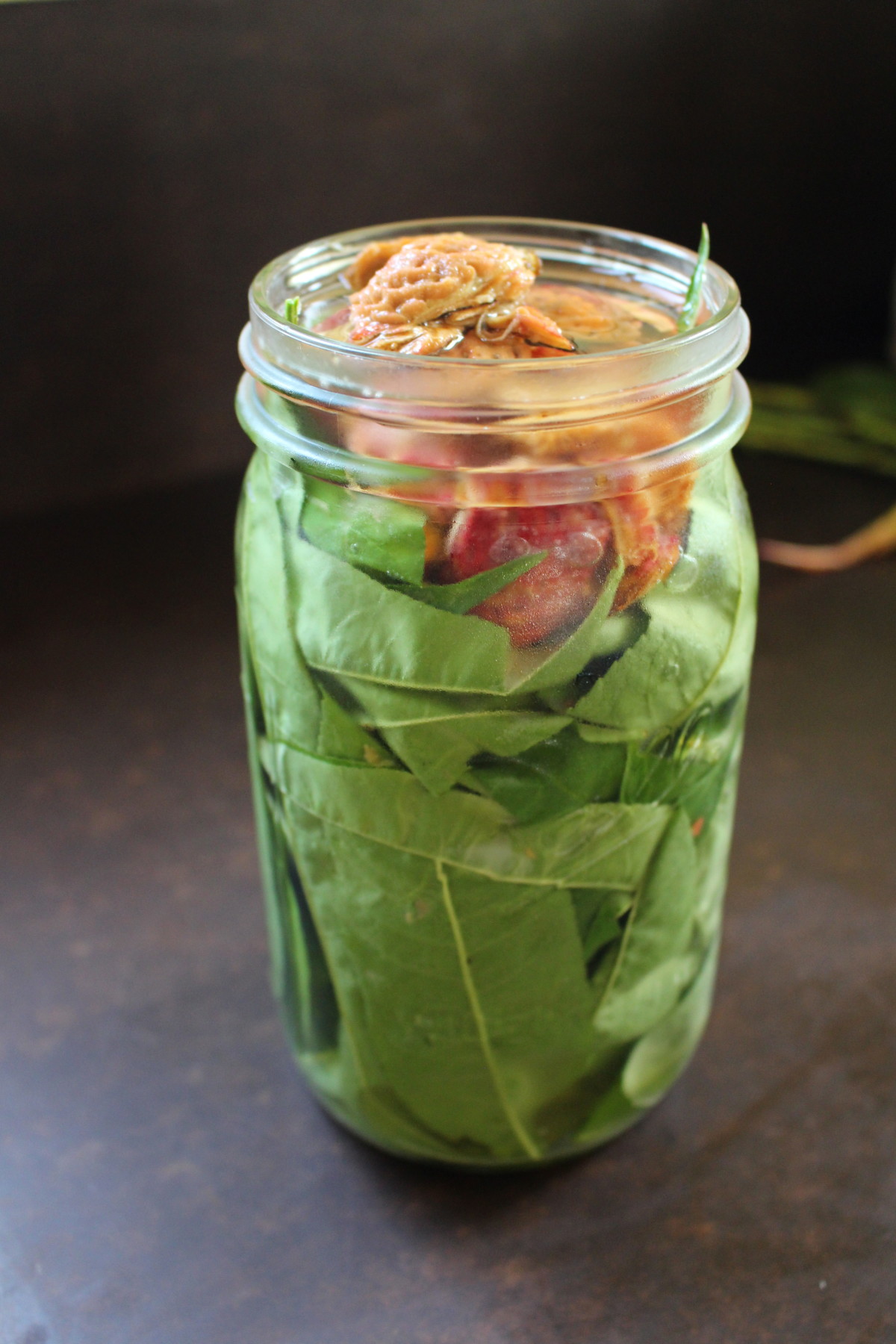
Let the mixture steep for two days. The cherry version seems to be fine at room temperature but I had better results with the peach and apricot versions when I let them age in the refrigerator.
Strain the mixture through cheesecloth and put it into a pretty bottle if you have one. You can also store it in the jar you made it in and then pour it into a pitcher to serve it. This should keep for a good long while if refrigerated, but it’s a summery drink so why not enjoy it over the next couple of months and just make more next year?
Serve in small glasses over ice and pretend you’re in France.

Note: The easiest way to crack pits is to wrap them in a rag or an old dishtowel and hit them with a hammer. Make sure to do this outside though so you don’t damage you countertops or make a huge mess. Not that I know anything about that.

It looks beautiful and sounds tasty and refreshing. Perfect for the 90 degree weather we keep having. Amazing how much color comes from the pits and skins! I can hardly wait to try some.
Chris xo
Ivy, this is crazy because 10 minutes ago I cracked my first apricot kernel. Someone just notified me of the little gem inside and I had to find out. (Also I just conveniently got an old nutcracker last weekend at a garage sale.) Then I went to the computer to search for how to make almond extract. Then I got sidetracked looking at your blog. And here we are. So excited to try this. Your blog is really hitting home for me.
I’m going to try making almond extract too. Also some brandy flavored with cherry pits to add to cocktails. I’ve got other ideas in the works but for the mean time I’m just freezing the pits to use later. Glad the blog speaks to you!
I am planning on a blog post about the ice cream. I really am. When I get around to it, can I link to yours? I love your posts!
Of course you can link to me. I can’t wait to hear what you have to say about the ice cream!
So . . . where did you acquire the leaves? These look divine and I’d like to try them (plus I’ve got two volunteers who would love to join me in freeing these pits from their juicy confines), but the leaves. Those might be hard to get. Maybe we’ll eat a bushel of stone fruit this weekend and I’ll try your brandy idea, instead. I do lurv a little nutty liqueur here and there.
We have lots of cherry trees around here and a few peach trees. And I was lucky enough to find a friend who had planted an experimental apricot tree. I don’t know if you guys have any of those in Denver. Ask around. I’m going to try plums also, do you have any plum trees?
But yes, I think the brandy idea is a good one. Maybe with a little sugar added. But taste it frequently, those noyaux can make a strong flavor pretty quickly. Let me know what you make!
Ivy,
This is fascinating! I hve always (idly) wondered about making almond extract from the kernels…
I am bringing you more red plums, and some branches…
Lyn
Thank you, your plums are the best! And I’m interested to see what kind of vin I can make from the leaves and pits too…